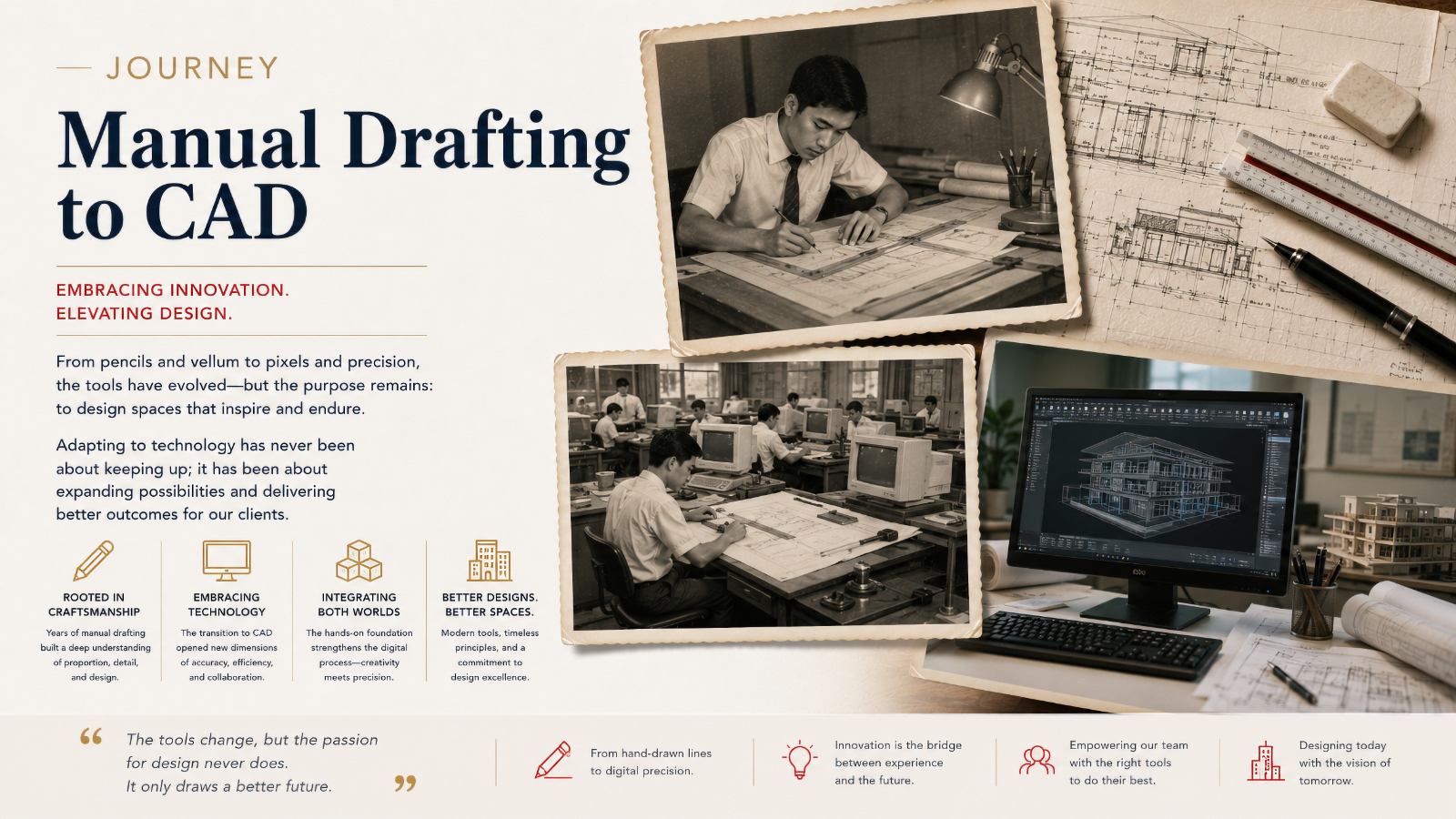
Every generation of architects experiences a technological revolution. During my career, I have been fortunate to witness—and participate in—one of the greatest transformations our profession has ever known: the transition from manual drafting to Computer-Aided Design (CAD).
For younger architects, computers have always been part of the profession. But for those of us who began with pencils, ink pens, and drafting boards, embracing digital technology required curiosity, perseverance, and a willingness to learn without a roadmap.
How Computer-Aided Design Revolutionized Our Office
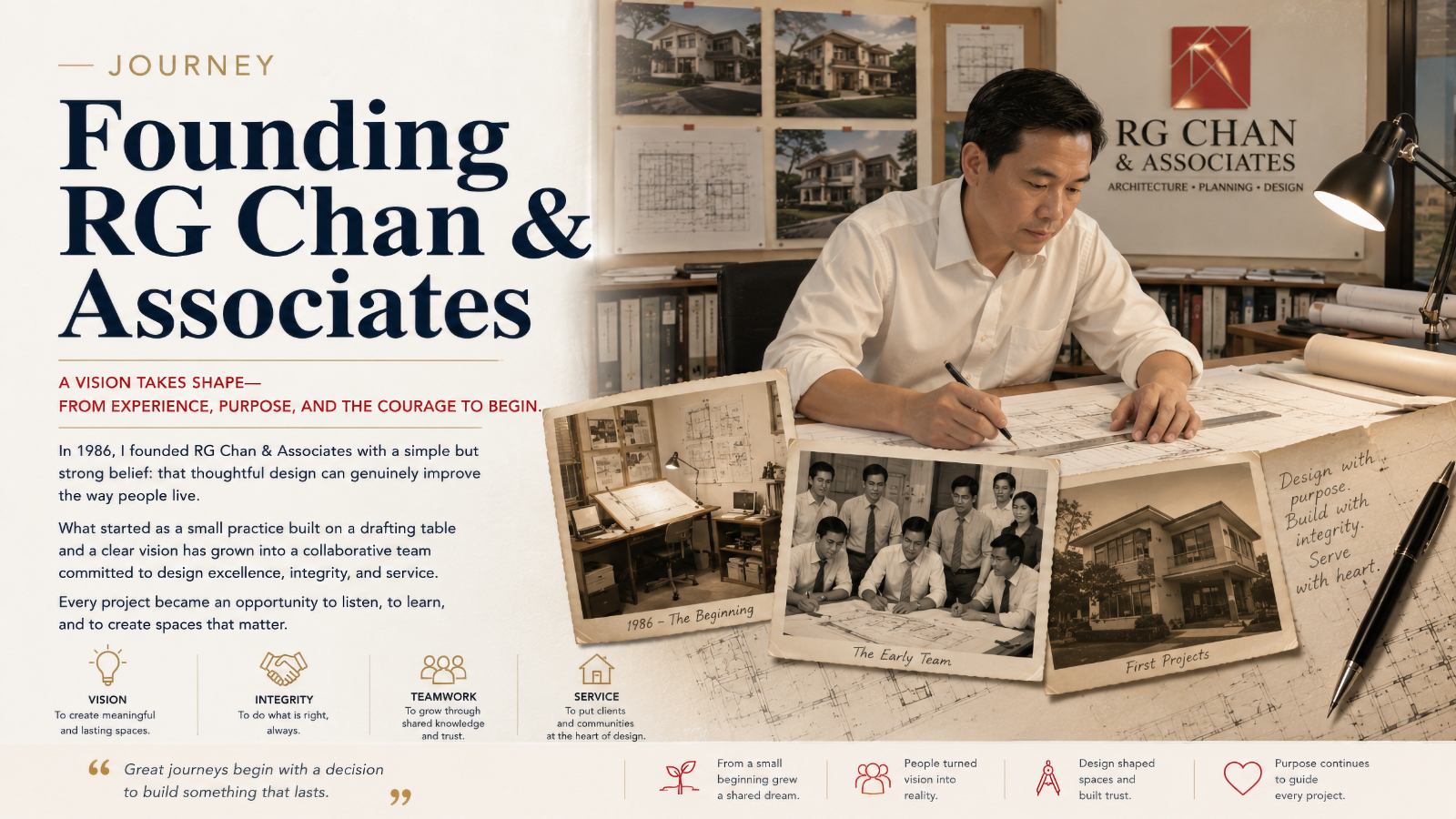
My interest in computers continued after founding RG Chan & Associates.
I vividly remember purchasing my first office computer. My former partner, Architect Edmund Puzon, personally accompanied me to Manila to buy an IBM-compatible XT computer clone, complete with its peripherals. At the time, it represented one of the largest investments our young firm had ever made.
By today's standards, the specifications seem almost unbelievable.
The computer contained only 512 kilobytes of memory, operated entirely under the Disk Operating System (DOS) that came from Microsoft, which had to be loaded every time the computer was started. The system did not have a hard disk. Every program had to be loaded from 5¼-inch floppy disks, requiring an entire collection simply to run the office. Large cathode-ray tube (CRT) monitors, that displayed green texts only; long before graphical user interfaces became commonplace. The computer mouse, has not yet arrived when we sstarted.
Our primary software consisted of WordStar for word processing and Lotus 1-2-3 for spreadsheets. A database application called dBASE III, was also available, but required plenty of man-hours to learn. Although primitive compared with today's applications, these programs gradually transformed how we prepared correspondence, project estimates, and technical specifications.
The drawings themselves, however, continued to be produced entirely by hand.
Life Before AutoCAD Changed Architectural Practice
Around 1985, our office transferred to 888 City Camp Road, where we continued to expand our architectural practice.
Projects such as the Laoag Meetinghouse for The Church of Jesus Christ of Latter-day Saints in 1989 were still drafted manually on traditional drawing boards. Every revision required erasing, redrawing, and checking countless details by hand.
By then, I had become convinced that Computer-Aided Drafting represented the future of architecture.
The problem was simple.
Almost nobody knew how to use it.
There were no online tutorials, training centers, or instructional videos. Learning AutoCAD meant reading whatever limited manuals were available and spending countless evenings experimenting through trial and error.
Progress came slowly, but every small breakthrough encouraged me to continue.
Learning AutoCAD Through Perseverance and Experimentation
Persistence eventually paid off.
By May 1991, our office completed the San Fabian Meetinghouse using Computer-Aided Design, marking one of our first fully CAD-produced architectural projects.
At that time, RG Chan & Associates operated five computer workstations, an impressive investment for a provincial architectural practice. Much of the production work was performed by office-trained student apprentices who learned alongside me as we explored this entirely new way of working.
Good fortune also arrived unexpectedly.
A Sydney-trained AutoCAD operator, "Peanuts" Alamani, joined our office for approximately one and a half years. Having gained valuable experience in Australia, he brought practical knowledge that accelerated our office's transition to CAD.
Sometimes, the right people arrive exactly when they are needed most.
Investing in CAD Software and Digital Production
Beyond the computers themselves, significant investments were necessary.
One of the most valuable additions to our office was ADCADD, a specialized application that operated on top of AutoCAD. It automated many repetitive drafting tasks and, most remarkably, enabled the production of three-dimensional perspectives—an impressive capability during the early 1990s.
Even greater was the investment required for output equipment.
Purchasing a flatbed pen plotter represented one of the largest capital expenditures our office had ever undertaken. The machine cost almost as much as an automobile, while its specialized plotting pens and accessories had to be sourced from Manila.
Looking back today, it is remarkable how much time, effort, and financial commitment were required simply to print a single drawing.
Early CAD Projects in the Philippines
As word spread that architectural projects could now be produced digitally in Baguio City, new opportunities followed.
One particularly memorable milestone was our consultancy work with Texas Instruments Philippines Inc. (TIPI) in 1994 and again in 1999. These projects demonstrated that Computer-Aided Design was no longer an experiment but a practical tool capable of supporting sophisticated industrial developments.
Each successful project strengthened our conviction that embracing technology was essential for delivering better service to our clients.
From Drafting Boards to Digital Design
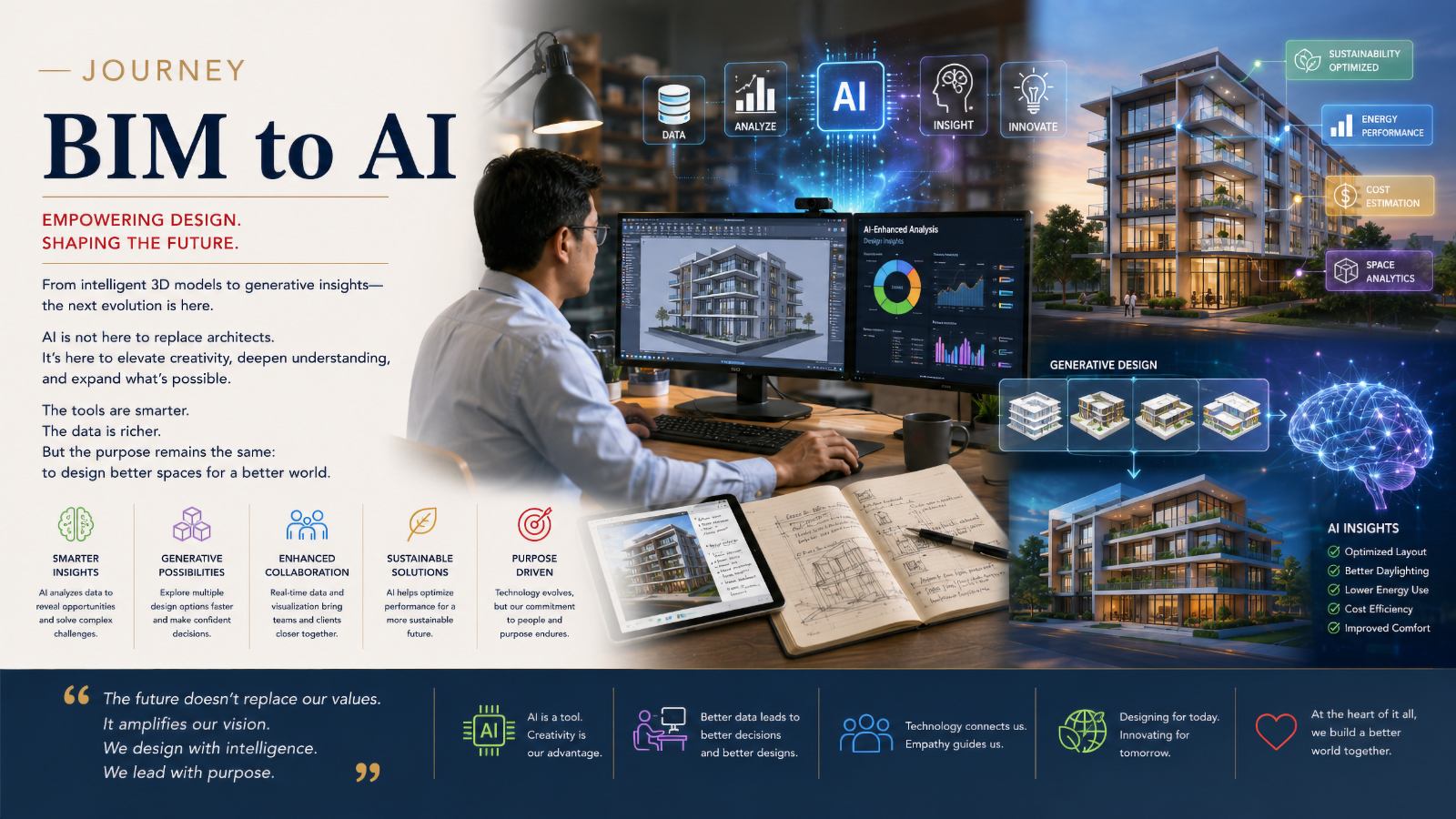
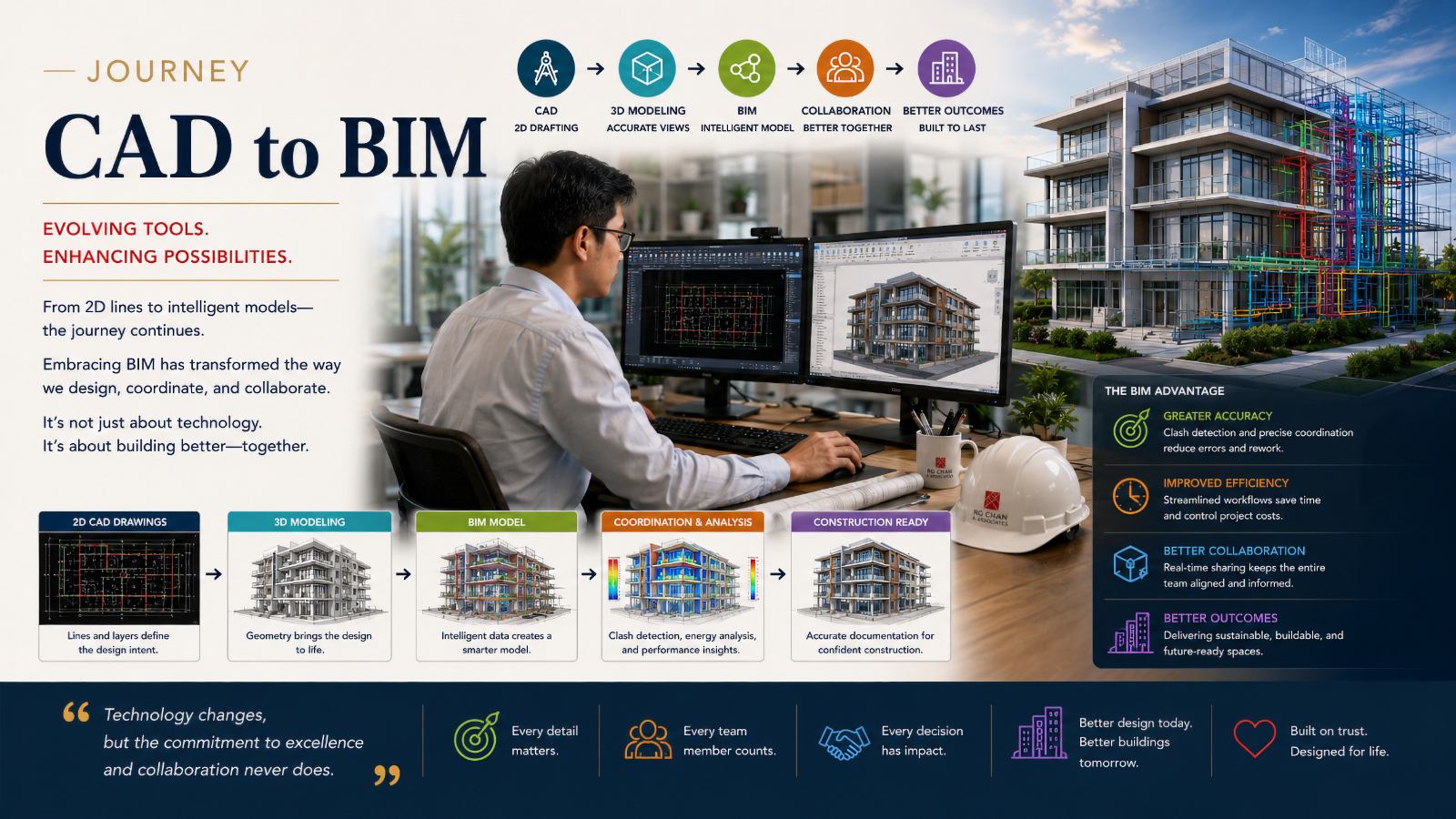
Today, architecture has progressed far beyond those early DOS computers and monochrome screens. Modern software produces intelligent Building Information Models, realistic visualizations, cloud collaboration, and increasingly, artificial intelligence-assisted workflows.
Yet every time I see today's powerful computers, I cannot help but smile.
I remember carrying boxes of floppy disks, waiting patiently for programs to load, carefully replacing worn plotting pens, and learning AutoCAD one command at a time through persistence rather than formal instruction.
The tools have changed beyond recognition, but the mindset remains exactly the same.
Technology rewards those who remain curious enough to keep learning.
That lesson, perhaps more than any software or hardware, has been the greatest investment of my professional life.